BWA Insolvency
Quarterly Market Report: Q2 2026
Retail insolvencies jump 74 per cent as business distress shifts to the shop floor
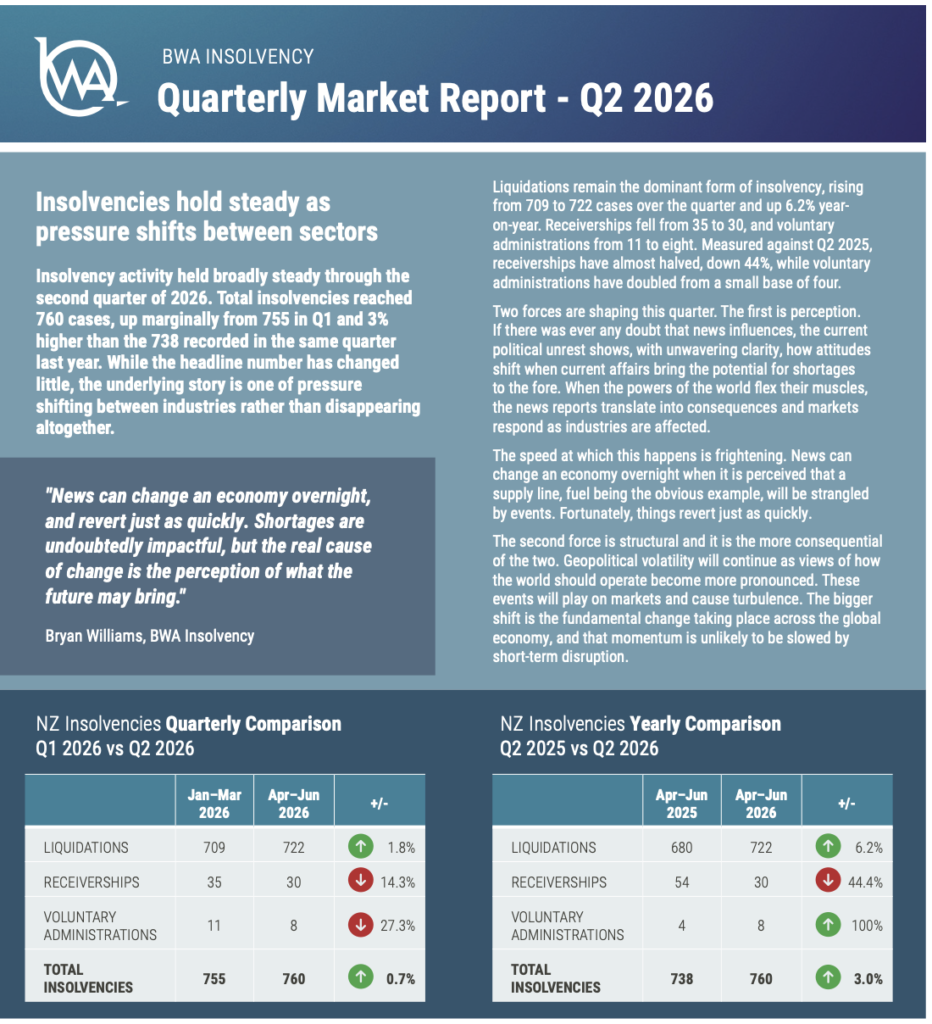
The number of retail businesses entering insolvency rose sharply in Q2, even as overall business failure numbers across New Zealand remained largely unchanged.
BWA Insolvency’s latest Quarterly Market Report shows that retail insolvencies increased from 39 to 68 cases in Q2 2026, a 74 per cent increase and the largest rise recorded across the country’s major industry sectors. Total insolvency numbers remained relatively stable, rising by just five cases quarter-on-quarter to 760, and just 3 per cent higher than Q2 2025 (738).
BWA Insolvency principal Bryan Williams says the flat national figure reflects a shift in where financial distress is being felt, rather than a reduction in it.
“The headline number has hardly moved, but business stress has changed address,” says Williams. “Pressure has come off the building sites and landed on the shop floor.
“Retailers are competing for a limited pool of consumer dollars, and households remain cautious about discretionary spending. Weak sales volumes and stubborn operating costs are a difficult combination to trade through.”
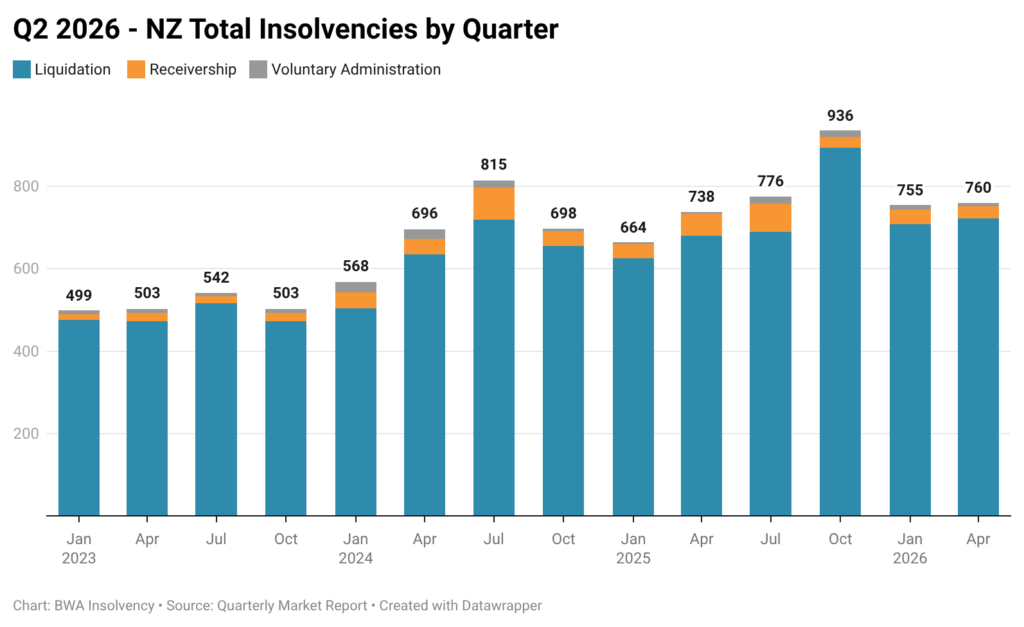
Business services recorded the next-largest increase, climbing from 74 to 87 insolvencies. Accommodation, personal services, medical and care businesses also recorded increases from smaller bases. Several high-volume sectors moved in the opposite direction.
- Construction insolvencies fell from 207 to 169 cases.
- Property and real estate declined from 76 to 62.
- Transport and delivery dropped from 42 to 30.
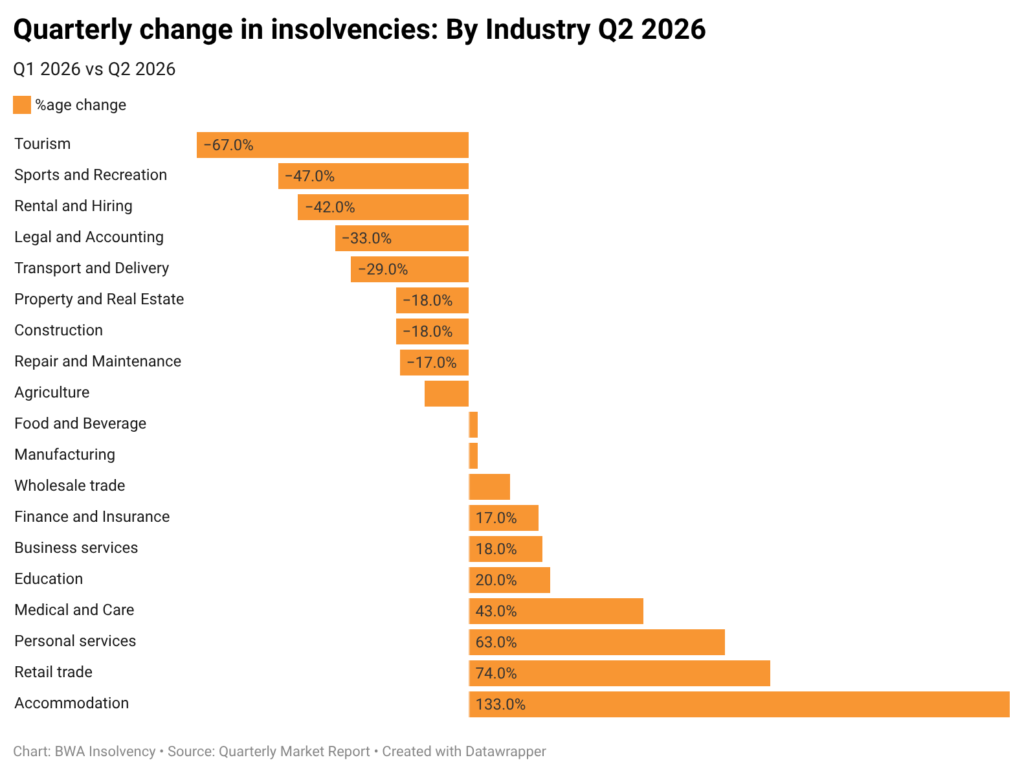
Construction remains the largest contributor to insolvency activity overall by volume.
Williams says the volatility of recent quarters is as much about perception as it is about underlying economic conditions.
“News can change an economy overnight when it is perceived that a supply line will be strangled by events. Fortunately, things revert just as quickly,” he says. “Shortages are impactful, but the real cause of change is the perception of what the future may bring.
“Geopolitical events will continue to create turbulence in markets, but they tend to be short-term. The bigger story is the long-term change taking place beneath the headlines, driven by artificial intelligence, digital currencies and private investment. Businesses that adapt to those changes will be best placed to succeed.”
Williams expects consumer conditions to improve in the second half of the year, without resolving the problems facing companies already carrying historic debt.
“Demand should lift as spring arrives, and Christmas will change the fortunes of some,” he says. “However, once the election is done, shades of austerity are likely as the fiscal deficit is addressed.”
Williams says companies with an outstanding obligation to Inland Revenue should not rely on improving conditions alone.
“For many of these companies, the debt burden is simply too large to be overcome by trading their way through. Better sales can help, but they are not enough to resolve years of accumulated obligations. The businesses that come through are usually the ones that seek advice early, while there are still options available. Once liquidation becomes the only viable path, there is often very little left to restructure.”
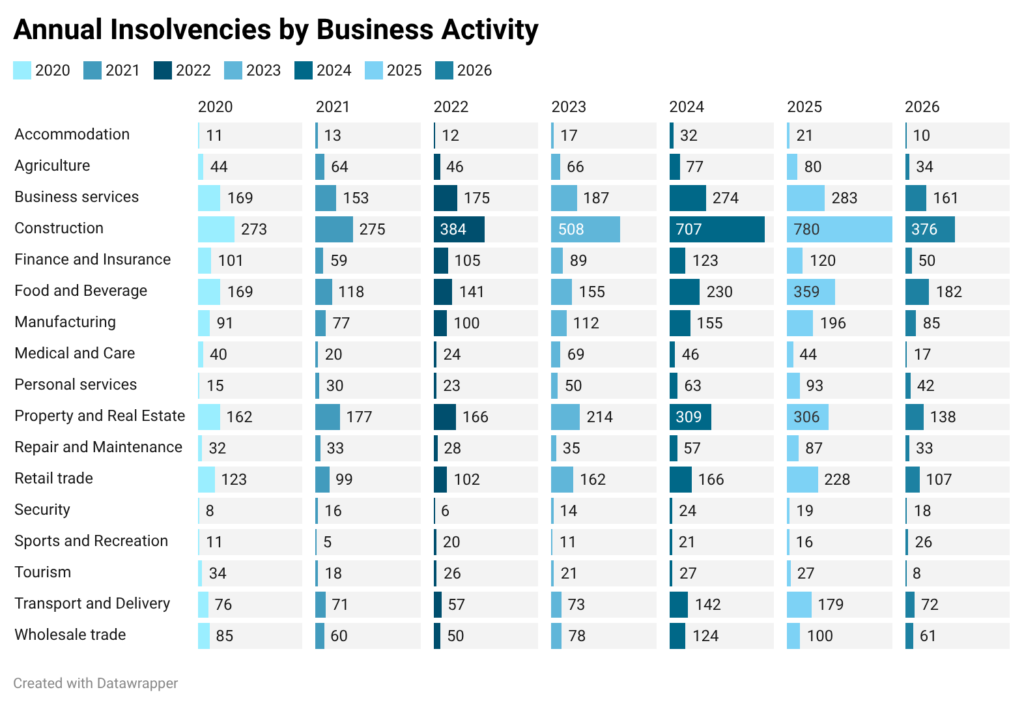
Note: BWA Insolvency figures are provisional when first published and are revised as later filings are matched and records verified. Figures in this release supersede those published in earlier reports and are current as at 15th July 2026.
The full Quarterly Market Report is available here.